
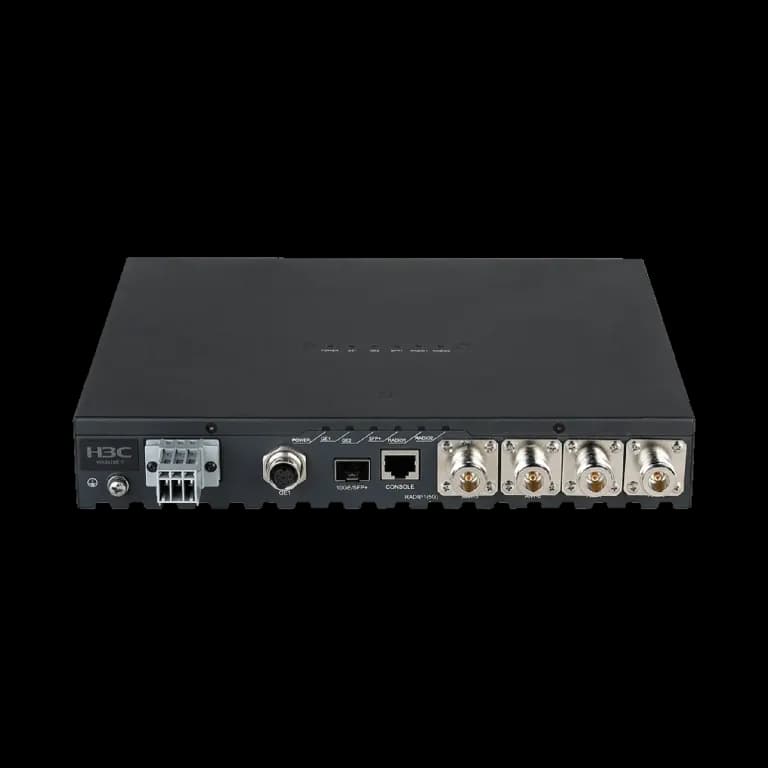
H3C WA6628E-T Wi-Fi 6 Rail Transit Access Point
An all-metal Wi-Fi 6 AP for trains and vehicles, with M12 connectors and resistance to strong electromagnetic interference.
Price on Request
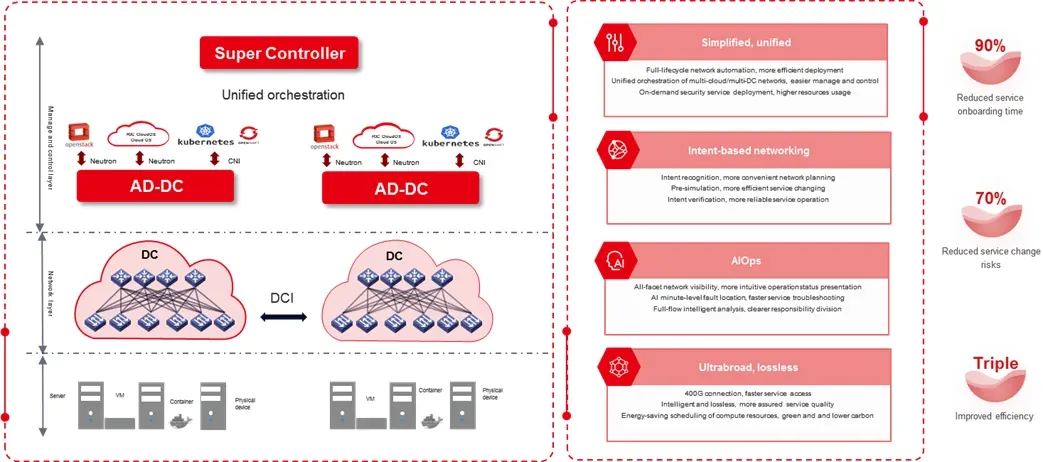
H3C's SDN solution for data-centre networks, automating underlay and overlay provisioning with built-in analytics and AI-assisted operations.
Island-wide delivery to all 25 districts
| Underlay network automation | · Underlay network automation with up to four layers: Spine, Aggregation, Leaf, and Access layers. · Automated underlay network provisioning with DRNI (MLAG) groups: Automated underlay network provisioning process. When the DRNI (MLAG) option is enabled in the fabric template and the intra-portal link (IPL) exists between two same layer devices, the DRNI (MLAG) device group is automatically configured with the two devices. · Automatic link-aggregation group (LAG) creation: The link-aggregation group can be manually or automatically configured on the switches of the DRNI (MLAG) group when a ser |
|---|---|
| Overlay network automation | · Bulk deployment of tenant, virtual network, virtual router, virtual subnet, virtual port, gateway, external network, floating IP and VLAN-VXLAN mapping with templates. · VLAN-VXLAN mapping: Map VLAN ID to overlay logical network’s VXLAN segment ID for access control. Each mapping is applied to specific interfaces or devices. · VXLAN service pre-configuration for server master and backup network interface failover. · Virtual Port QoS rate limit: Each virtual port represents one endpoint (VM, K8s pod, bare metal server, etc.). · Traffic behavior for specified tenant services: DSCP remark, rate |
| EVPN VXLAN | VXLAN with BGP EVPN control plane and distributed gateways. |
| Multicast | · Layer 3 multicast service in the same VPN and to the external network. · Layer 3 multicast service across VPNs. · Layer 2 multicast service across different data centers. · Layer 3 multicast service across different data centers. |
| Container network | · Interoperate with K8s to automatically provide network connectivity for K8s pods: Layer 2 and Layer 3 connectivity in the same VPN. · Interoperate with K8s to provide security policies for K8s pods. · Interoperate with K8s to provide QoS for K8s pods: Rate limit, DSCP remark, etc. · Access the service in a pod using the pod’s IP and port number e.g. Access the HTTP service in a pod using port 8080 · K8s cluster IP. · Interconnectivity with Calico. · K8s Pod IP and Node IP interconnectivity. · K8s pod fixed IP address. · H3C AD-DC interoperates with K8s via the H3C CNI plug-in. |
| IPv6 | · IPv4 and IPv6 dual-stack overlay network: IPv4/IPv6 endpoints can access the network. · IPv6 endpoints can access the IPv6 external network without NAT. |
| Easy provisioning and expansion | · Network provisioning wizard for the underlay network. · Network expansion wizard for the underlay network. |
| Security function | · Security policy for the endpoint: Applies to the virtual port. Each virtual port represents one endpoint (VM, K8s pod, bare meter, etc.). · Floating IP: H3C AD-DC can configure the Destination NAT (DNAT) service (floating IP service) on the H3C firewall to allow external users to use the public IP address and port number to access the internal virtual port’s IP address and port number. · Firewall as a Service (FWaaS): Manages H3C firewalls including virtual firewall instances and the firewall policies. · Antivirus as a Service (AVaaS): Configure Antivirus policies on the H3C firewall and pro |
| IP service chain | · The policy based IP service chain redirects traffic between two contexts through one or multiple firewalls, load balancers or third-party value-added service (VAS) instances Each context matches certain private subnets (VXLAN segments) or external network subnets. · Service chain drag-and-drop style configuration. · East-west IP service chain in a VPN: Each virtual router in H3C AD-DC represents a VPN. · East-west IP service chain across two VPNs. · East-west IP service chain across two fabrics: Each fabric contains a group of border, spine, leaf physical devices to form a network. Two fabri |
| Microsegmentation | · The microsegmentation application policy for a vRouter (VPN) performs certain action including deny, permit, redirect (service chain), etc. for traffic between two EPGs. · Whitelist and blacklist: An application policy can be applied to a VPN (vRouter) with a default action (deny all or permit all) and exception rules. Exception rules can be created for traffic between certain two EPGs as whitelist or blacklist. · Microsegmentation service chain matching Layer 4 protocol and port . · The microsegmentation service chain applies to traffic between two endpoint groups (EPGs) and can match Layer |
| 2-in-1 deployment | Service leaf and server leaf in one. Service leaf and border in one. |
| Basic operation and maintenance (O&M) | · Logs, alarms and dashboard. · Physical network topology, logical network topology, and application topology interactive display. · Loop detection and automatic removal. · Underlay network check:Connectivity check, black hole route check, routing loop check, and configuration check. · Overlay configuration consistency check between the controller and the device: Inconsistent configuration can be synchronized from AD-DC to the network device. · Configuration consistency check whitelist: Configuration in the whitelist won’t be displayed in the configuration differences between the controller an |
| Health assessment and insight | · Topology overview. · Network health overview. · Device health. · Chip health. · Interface health. · Queue health. · Transceiver modules health. · Daily, weekly and monthly health report. |
| Key performance indicators assessment and insight | · Link statistics analysis. · Transient Capture Buffer (TCB) packet loss statistics: Monitors packet loss in buffer. Displays packet loss of each traffic flow. · Mirror on Drop (MOD) packet loss statistics . · Monitors packet loss in the forwarding process on each device. Displays packet loss of each traffic flow. · Configuration change analysis and visualization. · Hardware resources change analysis and visualization: Including ARP, MAC, IPv4 routing, IPv6 routing, LLDP neighbor, VRF, VSI, L2VPN MAC tables and more. · Software version change. |
| TCP flow analysis | · Fabric TCP flow overview. · Host-dimension TCP flow analysis. · Application-dimension TCP flow analysis. · TCP flow session statistics. · Illegal flow analysis with configured compliance rules. · Illegal flow analysis of SYN flood attack. |
| INT flow analysis | In-band Network Telemetry (INT) analyzes latency caused by each device. |
| Topology interactive display based intelligent analysis | · Physical network topology, logical network topology, and application topology interactive display. · Inter-application topology. |
| Issue analysis | · Network Issues: Grouped into multiple types and sub-types. · Application Issues: Grouped into multiple types and sub-types. |
| Intelligent troubleshooting | · Device type problems. · Network type problems. · Protocol type problems. · Overlay type problems. · Problem discovery, identification and remediation in minutes (Closed-loop troubleshooting): Based on AI and big data technologies, H3C AD-DC helps IT team troubleshoot and remediate the problem in minutes with recommended remediation action for problems. |
| Intelligent prediction | Device KPI trend and prediction. |
| Intent simulation | · Device replacement impact analysis and assessment. · Service and configuration change simulation and assessment |
| Intent verification | · Reachability verification. · Consistency verification. · Isolation verification. · Black hole route and routing loop existence verification. |
| Emergency recovery | · Contingency plan with plan templates. · Tenant snapshot rollback. · Entire network restore point rollback. |
| AD-DC anywhere | · Connectivity across multiple fabrics: VMs in the same VPN can access each other across fabrics. · Remote Leaf: The remote leaf switch across WAN. |
| AD-DC lite | · All-in-one device: Server leaf, service leaf, border, spine, edge device roles in one device. · Single-node mode or three-node mode controller cluster. · Manages security devices (H3C firewalls) in the controller. |
| Multiple external network gateways | · Multiple gateways for a VPN in a single fabric. · Multiple VPNs, each with multiple gateways in a single fabric. · Multiple fabrics are managed by the same H3C AD-DC: Each fabric includes multiple physical Spine/Leaf/gateway/external network devices to form a full functional network. · Two gateways (deployed in two separate fabrics) for multiple fabrics. For each VPN, one gateway acts as the active gateway for VMs in all specified fabrics to access the external network while the other one acts as the standby gateway. · Active-standby gateways in two fabrics with H3C firewalls or third-party |
| Active-standby ISPs | The firewall can have static routes to multiple ISPs with different priorities for redundancy. |
| Data center interconnect (DCI) | · Each data center has its own H3C SeerEngine-DC controller. · Layer 2 connectivity between VMs across two data centers. · Layer 3 connectivity between VMs across two data centers with firewalls. · Layer 3 connectivity between VMs across two data centers without firewall. · Boarder and Edge Device (ED) 2-in-1 on the same device: Edge Device is used for DCI. · Individual Edge Device: The device only acts as an Edge Device. · The H3C Super Controller can manage multiple SeerEngine-DC controllers in multiple data centers and orchestrate the DCI. |
| Part numbers | LIS-ADNET-FCAPS-1, LIS-AD-DC-PSWF-MC-VAR, LIS-AD-DC-PSWB-MC-VAR |
An all-metal Wi-Fi 6 AP for trains and vehicles, with M12 connectors and resistance to strong electromagnetic interference.
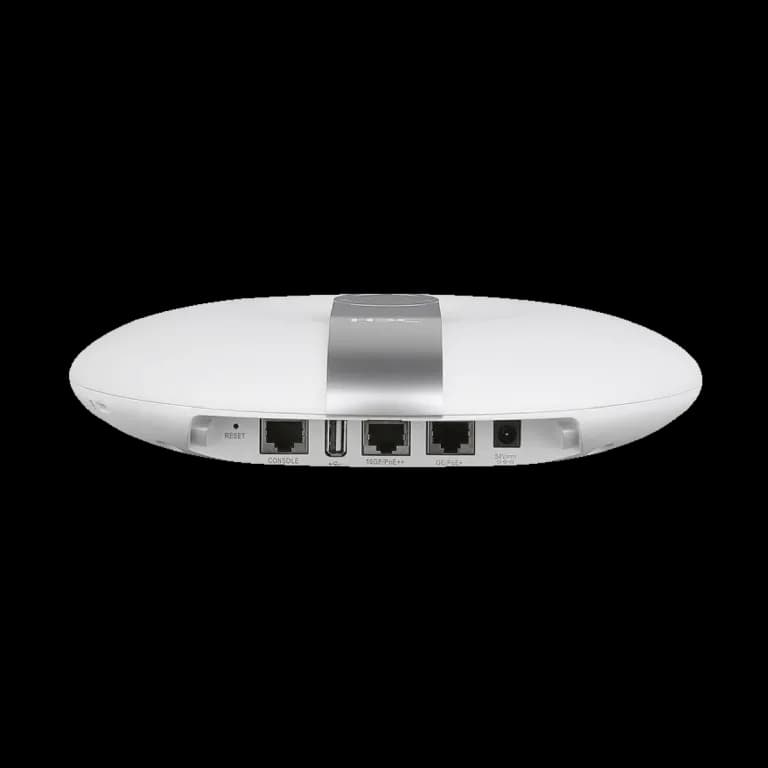
A 12-stream Wi-Fi 6 flagship with an 8x8 5 GHz radio and 10G uplink for stadiums, auditoriums and lecture halls.
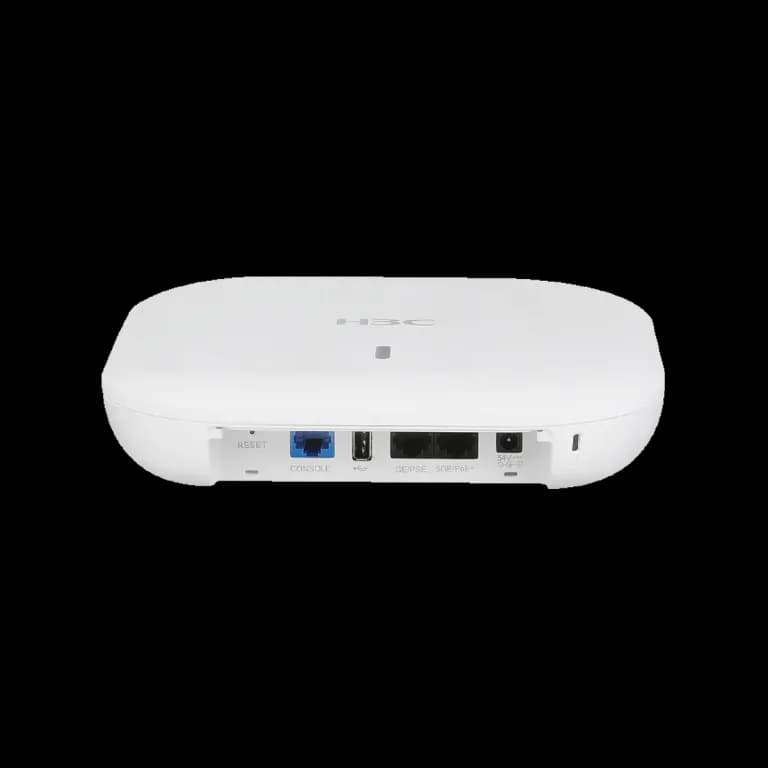
A Wi-Fi 6 AP with a 4x4 5 GHz radio and 5G multigigabit uplink for demanding indoor deployments.
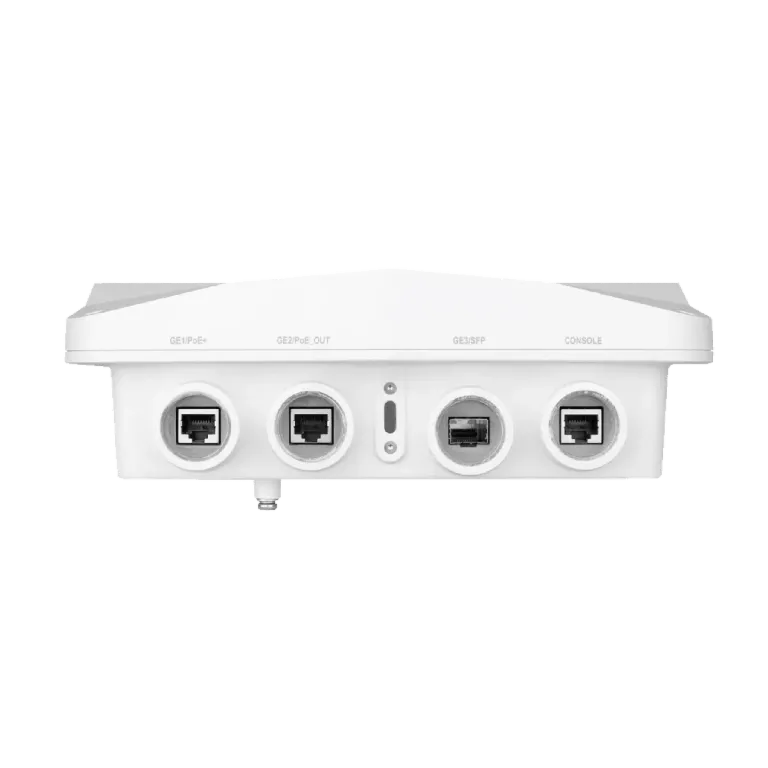
An outdoor Wi-Fi 6 AP with two 2x2 radios, switchable to dual 5 GHz, plus PoE-out for cameras or sensors.