
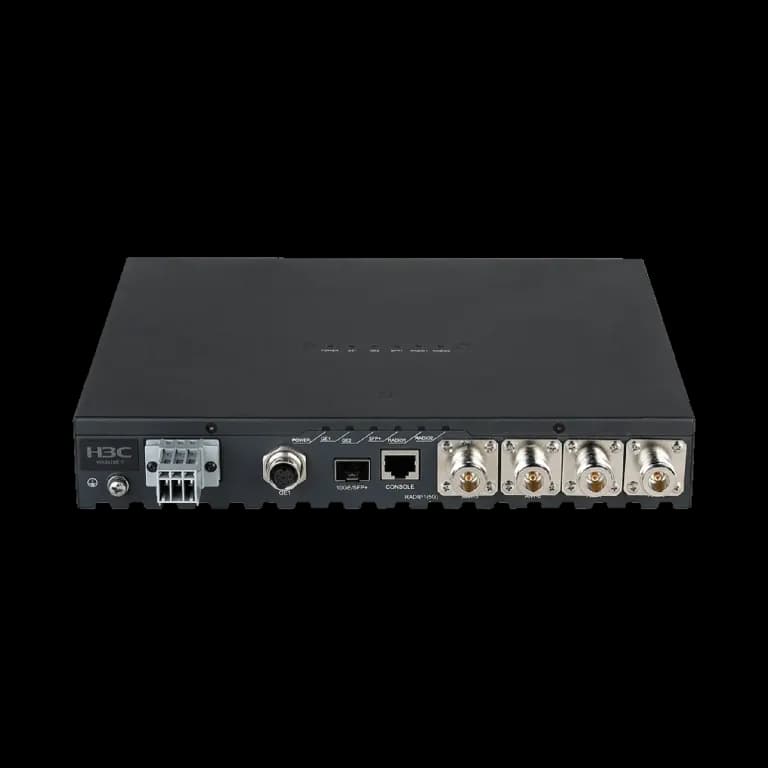
H3C WA6628E-T Wi-Fi 6 Rail Transit Access Point
An all-metal Wi-Fi 6 AP for trains and vehicles, with M12 connectors and resistance to strong electromagnetic interference.
Price on Request
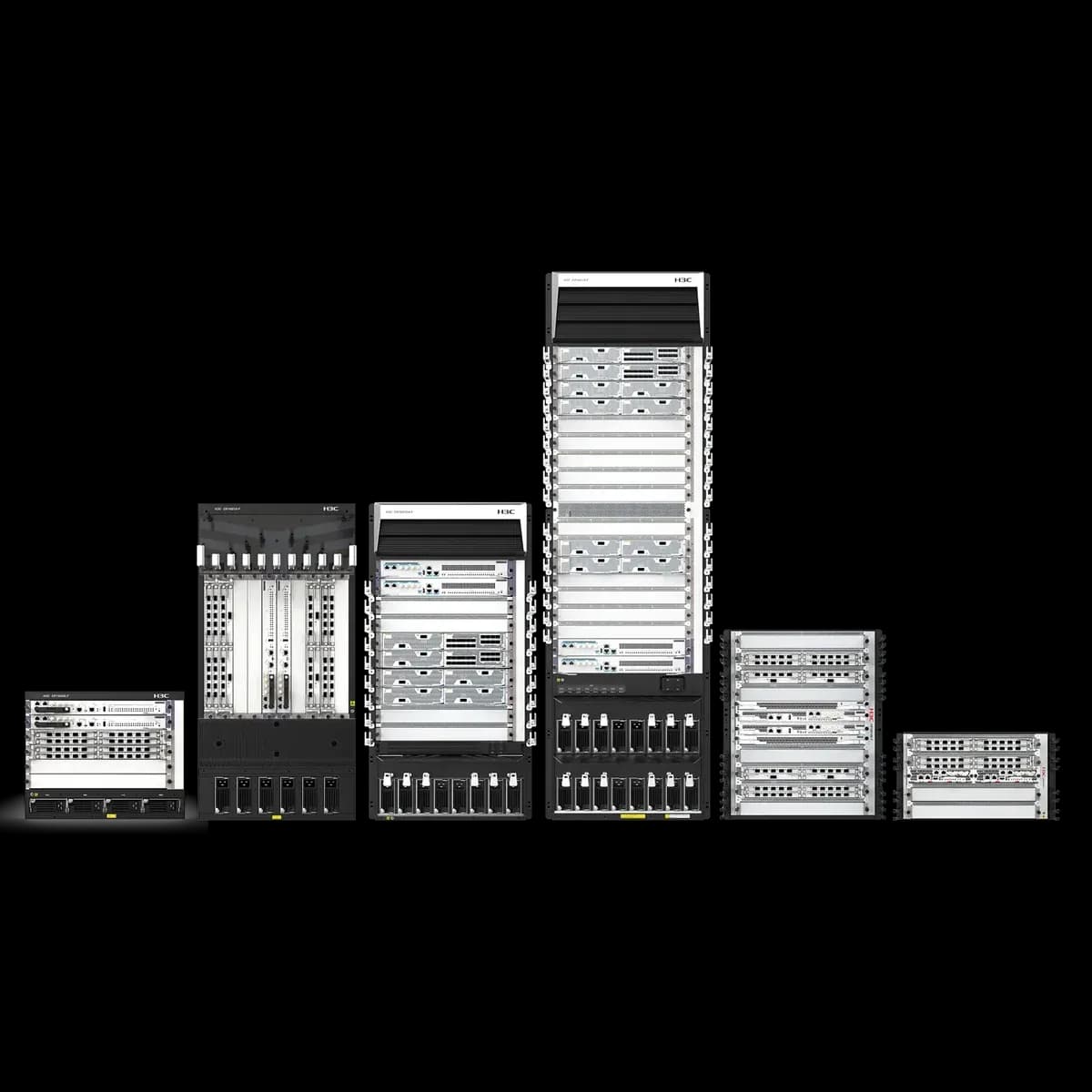
High-end routers with a CLOS fabric and up to 400GE interfaces, combining SRv6, BRAS and carrier-grade NAT for operators and large enterprises.
Island-wide delivery to all 25 districts
| Models | CR16003E-F, CR16006-F, CR16005E-F, CR16010-F, CR16010E-F, CR16010H-F, CR16018-F |
|---|---|
| Switching capacity | CR16003E-F: 6.4T; CR16006-F: 1.6T; CR16005E-F: 3.2T; CR16010-F: 6.4T; CR16010E-F: 19.2T; CR16010H-F: 25.6T; CR16018-F: 51.2T |
| Forwarding performance | CR16003E-F: 1619 Mpps; CR16006-F: 405 Mpps; CR16005E-F: 810 Mpps; CR16010-F: 1619 Mpps; CR16010E-F: 4857 Mpps; CR16010H-F: 6476 Mpps; CR16018-F: 12952 Mpps |
| Maximum board capacity | CR16003E-F: 1.6T; CR16006-F: 200G; CR16005E-F: 400G; CR16010-F: 400G; CR16010E-F: 1.6T; CR16010H-F: 1.6T; CR16018-F: 1.6T |
| MPU slots | 2 (1+1 redundancy) |
| Subcard slots | CR16003E-F: 8; CR16006-F: 16; CR16005E-F: 16; CR16010-F: 32; CR16010E-F: 32; CR16010H-F: 32; CR16018-F: 64 |
| Line card slots | CR16003E-F: 2; CR16006-F: 4; CR16005E-F: 4; CR16010-F: 8; CR16010E-F: 8; CR16010H-F: 8; CR16018-F: 16 |
| Switch fabric modules | CR16003E-F: 2 (1+1 redundancy); CR16006-F: 4 (N+M redundancy); CR16005E-F: 2 (1+1 redundancy); CR16010-F: 4 (N+M redundancy); CR16010E-F: 2+2 (N+M redundancy); CR16010H-F: 5 (N+M redundancy); CR16018-F: 5 (N+M redundancy) |
| Total number of slots (LPUs + MPUs + independent switch fabric modules) | CR16003E-F: 4; CR16006-F: 10; CR16005E-F: 6; CR16010-F: 14; CR16010E-F: 12; CR16010H-F: 15; CR16018-F: 23 |
| Chassis | Integrated chassis, which can be installed in a 19-inch rack |
| Power module system | CR16003E-F: 4 × AC or DC power supplies (N+M redundancy) and built-in AC power supplies; CR16006-F: 4 × AC or DC power supplies (N+M redundancy) and built-in AC power supplies; CR16005E-F: 4 × AC or DC power supplies (N+M redundancy) and built-in AC power supplies; CR16010-F: 6 × AC or DC power supplies (N+M redundancy) and built-in AC power supplies; CR16010E-F: 6 × AC or DC power supplies (N+M redundancy) and built-in AC power supplies; CR16010H-F: 8 × AC or DC power supplies (N+M redundancy) and built-in AC power supplies; CR16018-F: 16 × AC or DC power supplies (N+M redundancy) and built-i |
| Dimensions (H × W × D) | CR16003E-F: 220 × 440 × 480 mm (8.66×17.32×18.90 in) (5RU); CR16006-F: 353 × 440 × 660 mm (13.90 × 17.32 × 25.98 in) (8RU); CR16005E-F: 264 × 440 × 600 mm (10.39 × 17.32 × 23.62 in) (6RU); CR16010-F: 930 × 440 × 660 mm (36.61 × 17.32 × 25.98 in) (21RU); CR16010E-F: 575 × 440 × 600 mm (22.64 × 17.32 × 23.70 in) (13RU); CR16010H-F: 931 × 440 × 640 mm (36.65 × 17.32 × 25.20 in) (21RU); CR16018-F: 1687 × 440 × 640 mm (66.42 × 17.32 × 25.20 in) (38RU) |
| Max. weight (fully configured) | CR16003E-F: <70 kg (154.32 lb); CR16006-F: <85 kg (187.39 lb); CR16005E-F: <70 kg (154.32 lb); CR16010-F: <154 kg (339.51 lb); CR16010E-F: <130 kg (286.60 lb); CR16010H-F: <165 kg (363.76 lb); CR16018-F: <350 kg (771.62 lb) |
| MTBF [year] | CR16003E-F: 26.62; CR16006-F: 36.36; CR16005E-F: 36.1; CR16010-F: 33.11; CR16010E-F: 33.2; CR16010H-F: 44.05; CR16018-F: 38.17 |
| MTTR [hour] | 0.5 |
| Availability | 0.99999 |
| Interface types | FE, GE, 10-GE (LAN/WAN), 25-GE, 40-GE, 50-GE, 100-GE, 400-GE, 155M POS, 622M POS, 2.5G POS, 10G POS, CPOS, 155M ATM, 622M ATM, E1/T1 400-GE to 100-GE interface switching 100-GE to 40-GE interface switching 155M POS, 622M POS, and GE interface switching ATM to POS interface switching 155M ATM to 622M ATM interface switching |
| Unicast routing | IPv4/IPv6 dual stack IPv4/ IPv6 FIB table with up to 4M/2M entries IPv4/ IPv6 Routing table with up to 25M/12M entries Static routing, RIP, RIPv2, RIPng, OSPF, OSPFv3, IS-IS, IS-ISv6, BGP, BGP4+, and MP-BGP DHCP VRRP and VRRPv3 IPv6 neighbor discovery, PMTU discovery, TCP6, ping IPv6, traceroute IPv6, socket IPv6, static IPv6 DNS, specifying an IPv6 DNS server, and TFTP IPv6 client ICMPv6 MIB, UDP6 MIB, TCP6 MIB, and IPv6 MIB ECMP/UCMP Policy-based routing Routing policies Tunneling technologies such as GRE FRR for static routing, OSPF, IS-IS, BGP, and OSPFv3 Filtering routes based on IP addre |
| Multicast | Routing protocols such as PIM-DM, PIM-SM, PIM-SSM, MSDP, MBGP, and anycast-RP IGMP v1/v2/v3 and IGMP snooping v1/v2/v3 IGMP Proxy and Snooping PIM6-DM, PIM6-SM, and PIM6-SSM MLD v1/v2 and MLD snooping v1 Multicast policies and multicast QoS BIER |
| MPLS VPN | MPLS label distribution protocols such as LDP and RSVP-TE, and LDP label capacity greater than 512K P/PE functions, which comply with RFC2547bis Three inter-AS MPLS VPN methods (Option1/Option2/Option3) Hierarchy of PE (HoPE) Multi-role hosts BGP and LDP L2VPN, L3VPN, VPLS and inter-AS L2VPN/L3VPN EVPN VPLS/VPWS/L3VPN 6PE and 6vPE Distributed multicast VPN ACL-based traffic identification and redirection to different VPNs MPLS VPN troubleshooting features, including MPLS ping and MPLS traceroute L2VPN access to L3VPN VPLS access in QinQ mode MPLS TE FRR and LDP FRR |
| BRAS service | PPPoE, PPPoEoVLAN, and PPPoEoQ access authentication methods PPPoX function, and PPPoA and PPPoEoA access authentication methods Layer 2 portal, Layer 3 portal, and QinQ portal access authentication methods IPoE, IPoEoVLAN, and IPoEoQ access authentication methods Subnet-/interface-/L2VPN-leased access authentication methods L2TP Layer 2 transparent access and Layer 3 transparent access Remote AAA based on RADIUS/TACACS+ RADIUS, TACACS, and COPS protocols Intelligent target accounting (ITA), which differentiates services by destination addresses to perform accounting, bandwidth control, and Qo |
| Value-added services | IPsec on the following types of interfaces: high-speed link interfaces (FE, GE, 10-GE, 40-GE, 50-GE, 100-GE, 2.5G POS, and 10G POS) and low-speed link interfaces (155M POS, 622M POS, CPOS interface, 155M ATM, 622M ATM, and E1/T1) High-precision NAT: Carrier Grade NAT (CGN), Static NAT, Dynamic NAT, NAT44/NAT444, NAT64 1588 V2 |
| Virtualization features | Virtualization technology, which virtualizes multiple physical devices into a logical device, manages devices and forwarding entries on a unified interface, and supports multi-chassis link aggregation |
| ACL | IPv4/IPv6 standard ACLs and extended ACLs Layer 2/Layer 3/Layer 4-based ACLs Ingress/Egress ACLs Hardware ACLs |
| QoS | Hierarchical QoS (HQoS) and queue scheduling mechanisms such as PQ, WFQ, and CBWFQ 5-level HQoS scheduling for granular service management Traffic shaping Congestion avoidance technologies such as tail drop (TD) and Weighted Random Early Detection (WRED) Priority marking/remarking, and 802.1p, ToS, DSCP, and EXP priority mappings Congestion avoidance, traffic policing (CAR), and traffic shaping Packet marking based on IP address, port number, 802.1p priority, and DSCP value Multi-level queue scheduling mechanisms (including CQ, PQ, LLQ, and WFQ) for packets Multicast QoS QPPB, and QoS for MPLS |
| Ethernet | 802.1Q, VLAN QinQ termination Layer2ProtocolTunneling 802.3d (STP), 802.3w (RSTP), and 802.3s (MSTP) IEEE 802.3ad (link aggregation), static link aggregation, and multi-card link aggregation Aggregation of interfaces at different rates Port mirroring (SPAN/RSPAN) and flow mirroring MACsec FlexE Subinterface channelization (slicing) On-demand channelization (slicing) |
| SDN | VXLAN Layer 2 gateway and VXLAN Layer 3 gateway (distributed and centralized) EVPN VXLAN Layer 2 gateway and EVPN VXLAN Layer 3 gateway (distributed and centralized) PCEP Network information collection protocols such as BGP-LS NETCONF and YANG SR-BE, SR-TE and SR Policy, SR TI-LFA/Anti-micro-loop SRv6-BE, SRv6 TE policy CBTS BGP FlowSpec Telemetry APN6 OSPFv3 over SRv6 and IS-IS over SRv6 L2VPN over SRv6, EVPN VPWS over SRv6 policy, and EVPN VPLS over SRv6 policy Color-based traffic steering and DSCP-based traffic steering by SRv6-TE policy Optimization capabilities based on latency, bandwidth |
| Network flow analysis | NetStream, which supports the v5/v8/v9 data export formats, sampling, and flow statistics collection Multiple log hosts Hardware-based network traffic application analysis IPv4/IPv6/MPLS traffic collection and analysis Traffic collection and analysis in the inbound and outbound directions of interfaces Abnormal traffic detection and monitoring |
An all-metal Wi-Fi 6 AP for trains and vehicles, with M12 connectors and resistance to strong electromagnetic interference.
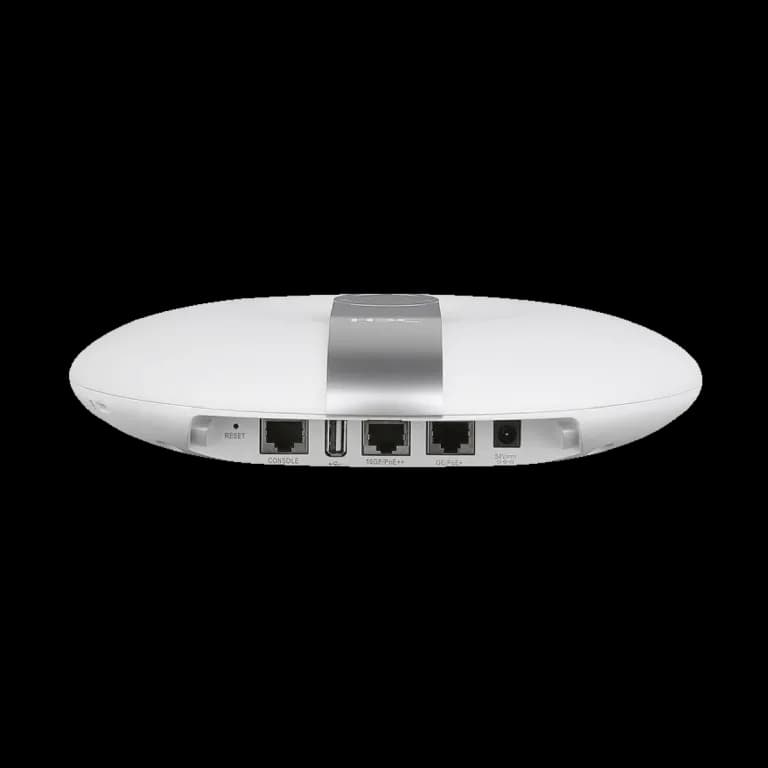
A 12-stream Wi-Fi 6 flagship with an 8x8 5 GHz radio and 10G uplink for stadiums, auditoriums and lecture halls.
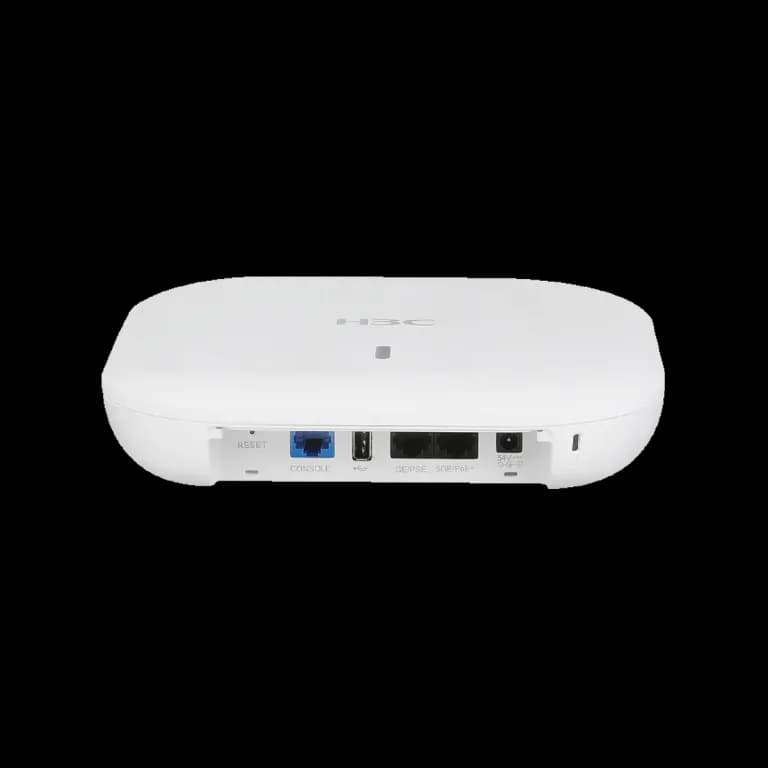
A Wi-Fi 6 AP with a 4x4 5 GHz radio and 5G multigigabit uplink for demanding indoor deployments.
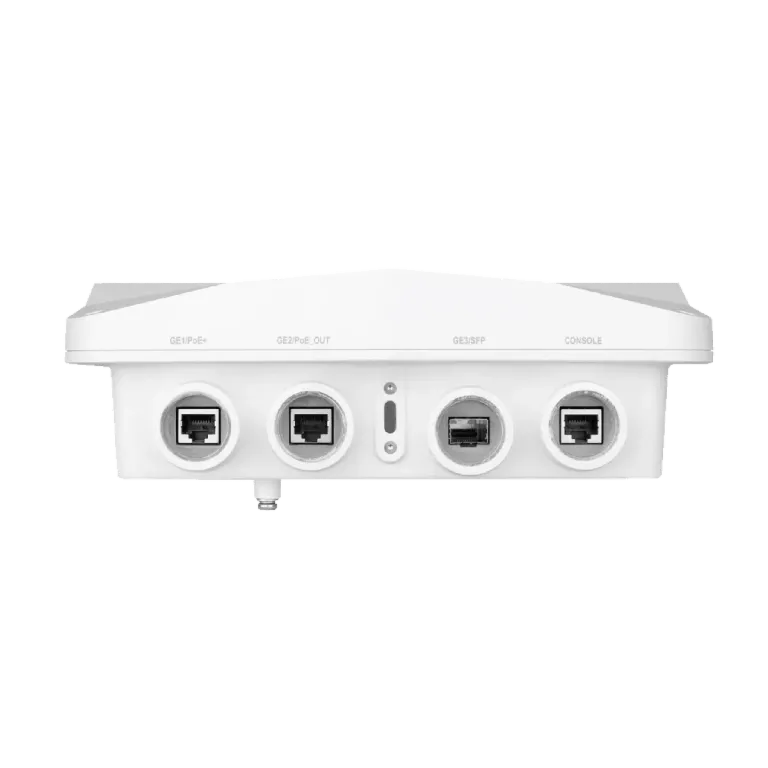
An outdoor Wi-Fi 6 AP with two 2x2 radios, switchable to dual 5 GHz, plus PoE-out for cameras or sensors.